The Care Guide
How to clean and care for bamboo utensils.
Bamboo cooking utensils need only a minute of care after each use and a little oil now and then. Do that, and they stay smooth, stain-resistant and good-looking for years. Here's everything you need to know.
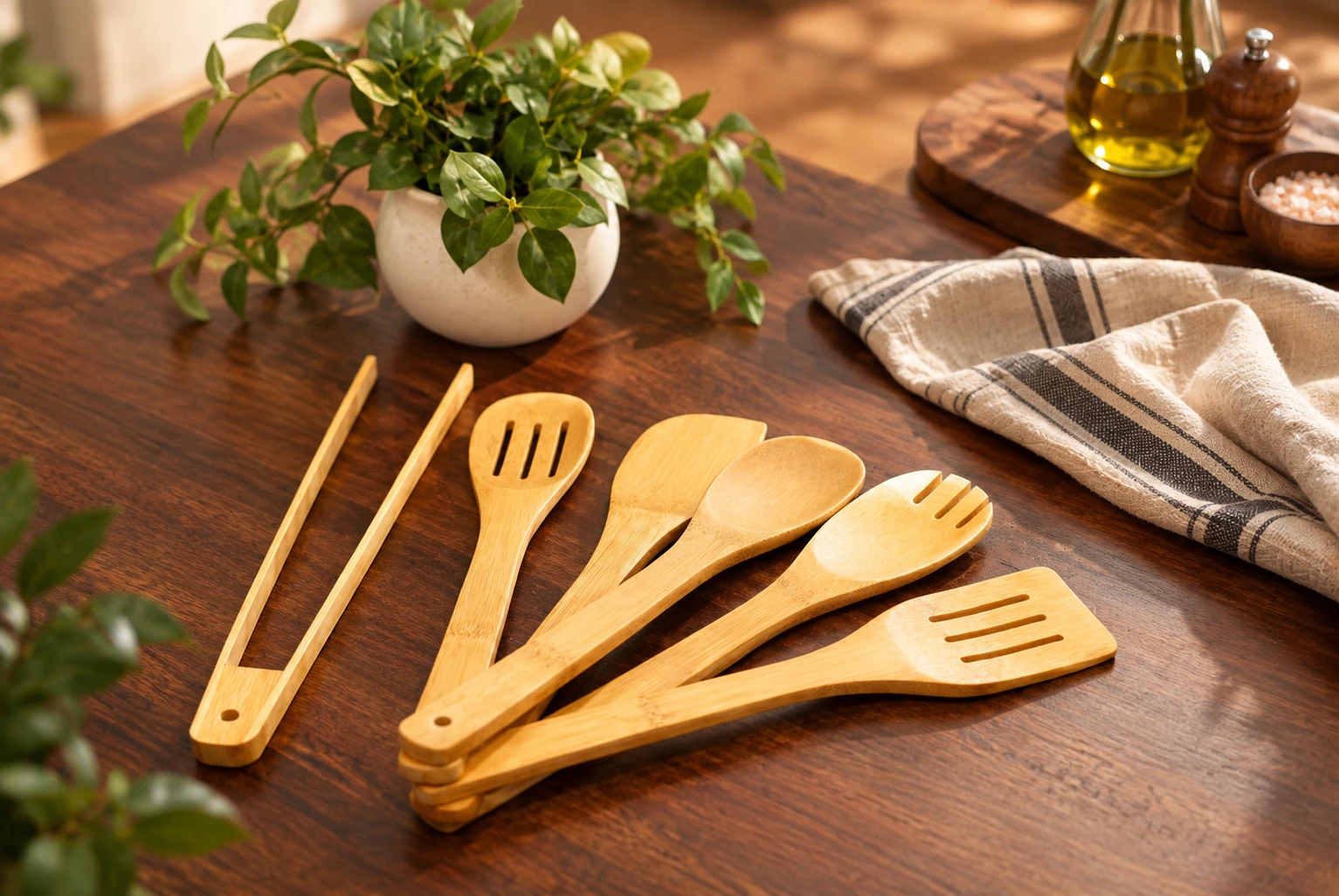
1. Wash by hand after each use
Rinse your bamboo utensils as soon as you're done cooking, before food has a chance to dry on. Wash with warm water, a drop of mild dish soap and a soft sponge or brush, then rinse well. Pay attention to the slots in slotted spoons and turners, and the hinge of bamboo tongs, where food likes to hide.
Skip abrasive scouring pads. They scratch the surface and strip away the oil finish that protects the bamboo.
2. Dry straight away
Water is the biggest enemy of any wooden kitchen utensil. Towel-dry each piece right after washing, then stand them upright in a utensil holder or lay them on a rack so air reaches every side. Don't put them away damp, and don't leave them lying in a puddle on the counter.
3. Oil every few weeks
Oiling keeps bamboo from drying out, which is what leads to cracks, rough patches and stains. You'll know it's time when the utensils look pale or chalky, or feel dry to the touch. For most kitchens, that's every three to four weeks.
- Start with clean, completely dry utensils.
- Pour a little food-grade mineral oil onto a soft cloth or paper towel.
- Rub it into every surface, including the handle and the edges.
- Leave the oil to soak in for a few hours, or overnight.
- Wipe off any excess with a clean cloth.
Which oil? Use food-grade mineral oil or a board cream made from mineral oil and beeswax. Avoid olive oil, vegetable oil and other cooking oils: they can go rancid, turn sticky and leave a stale smell.
How to remove stains and smells
Turmeric, tomato sauce and coffee can tint light bamboo, and garlic or onion smells sometimes linger. These natural fixes lift most of them:
- Baking soda paste: mix baking soda with a little water, scrub gently, then rinse.
- Lemon and salt: dip half a lemon in coarse salt and rub it over the stain or smell.
- White vinegar: wipe with diluted white vinegar to freshen up strong odours.
Rinse, dry thoroughly and oil the utensil afterward, since these methods also strip some of its oil.
How to fix rough or fuzzy bamboo
If your bamboo feels a little fuzzy, especially in the first few washes, that's the grain rising as it meets water. It's normal and easy to fix. Sand lightly with fine 320–400 grit sandpaper, moving along the grain, wipe away the dust, and oil it. After one or two rounds, it stays smooth.
What to avoid
- The dishwasher: high heat and long wet cycles dry bamboo out and can warp or crack it.
- Soaking: leaving bamboo in a sink of water lets it swell, then split as it dries.
- The microwave: it can dry bamboo out quickly and cause cracks.
- Resting on a hot pan: stirring is fine, but don't leave utensils sitting against a hot pan edge or burner.
When to replace bamboo utensils
A well-cared-for bamboo utensil set lasts for years. Replace a piece if it develops a deep crack or split that traps food, or mould that comes back after cleaning. Light stains and surface scratches are only cosmetic and can usually be sanded and oiled away.
Why bamboo is worth the care
Bamboo is a fast-growing grass that regrows without replanting. It makes a dense, hard utensil that won't scratch nonstick pans, won't melt like plastic, and holds up to daily cooking. A minute of care is a small price for tools you'll reach for every day. Read more about why we chose bamboo.
Questions
Bamboo care,
answered.
How often should you oil bamboo utensils?
Every three to four weeks with regular use, or any time the bamboo looks pale, dry or feels rough. New utensils benefit from an extra coat in their first week.
What oil is best for bamboo utensils?
Food-grade mineral oil is the standard choice because it never goes rancid. A board cream made from mineral oil and beeswax works too. Avoid olive, vegetable and other cooking oils, which can turn sticky and smell stale over time.
Can bamboo utensils go in the dishwasher?
No. The long hot cycle and harsh detergent dry the bamboo out, raise the grain and can cause cracks or warping. Hand washing takes less than a minute.
Why do my bamboo utensils feel fuzzy or rough?
Water raises the fibres on the surface, especially when the bamboo is new or dry. Rub it lightly with fine 320–400 grit sandpaper, wipe off the dust and give it a coat of oil to make it smooth again.
How do you get stains and smells out of bamboo utensils?
Scrub with a paste of baking soda and a little water, or rub with half a lemon dipped in coarse salt. Rinse, dry well, and oil afterward. For a strong smell such as garlic, a short wipe with white vinegar also helps.
When should you replace bamboo utensils?
Replace a utensil if it develops a deep crack, a split that catches food, or mould that comes back after cleaning. With regular oiling, a good bamboo utensil set lasts for years.